Knowing how to change a tire is an important life skill. A flat tire can happen anywhere—on the road, at home, or during a trip. If you know what to do, you can save time, avoid stress, and stay safe. This guide explains the full process in clear and simple steps so anyone can follow it, even if it’s your first time.
Why Learning How to Change a Tire Is Important
A flat tire does not always happen near a repair shop. Learning how to change a tire helps you:
-
Get back on the road quickly
-
Avoid waiting for roadside assistance
-
Stay safe in emergency situations
It’s a basic skill every driver should know.
What You Need to Change a Tire
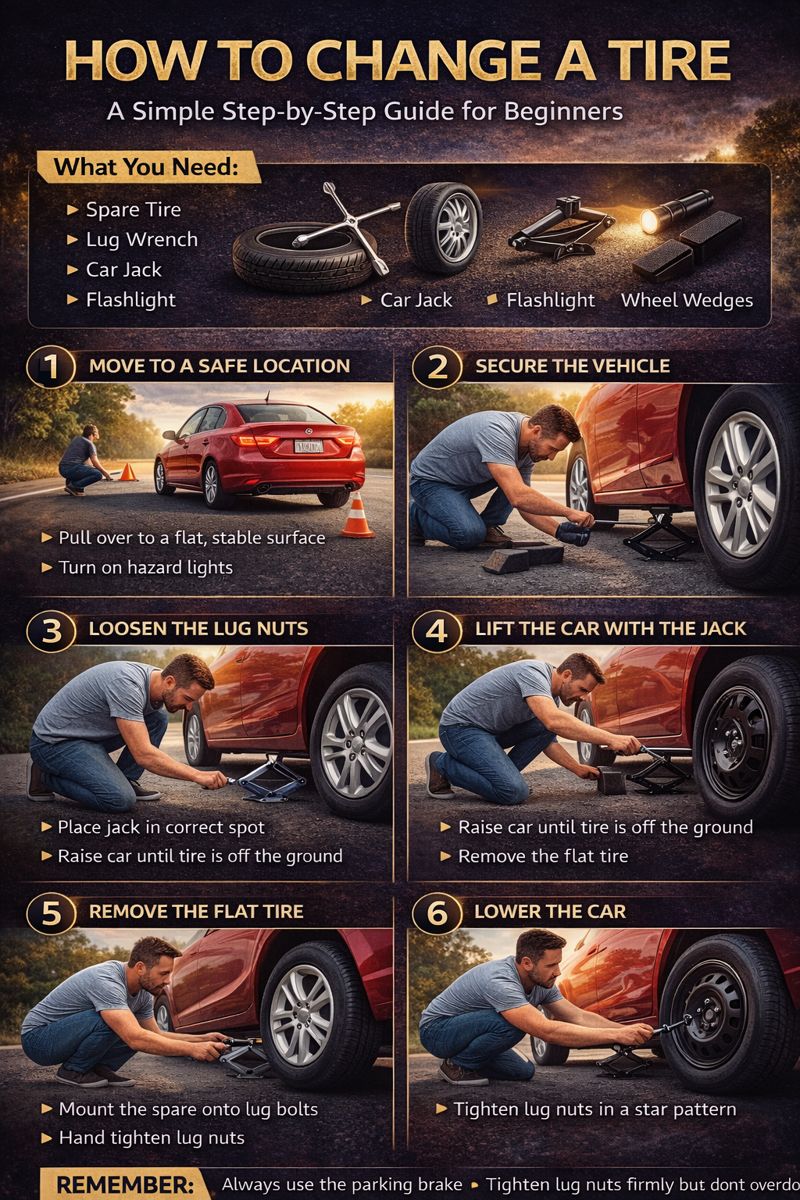
Before you start, make sure you have the following items:
-
Spare tire (inflated)
-
Car jack
-
Lug wrench
-
Wheel wedges or heavy objects
-
Flashlight (if it’s dark)
Most of these tools are already in your car’s trunk.
Step 1: Move to a Safe Location
As soon as you notice a flat tire:
-
Pull over to a flat, stable surface
-
Turn on your hazard lights
-
Avoid stopping on curves or hills
Safety always comes first.
Step 2: Secure the Vehicle
Before lifting the car:
-
Apply the parking brake
-
Place wheel wedges behind the tires
-
Turn off the engine
This prevents the car from rolling.
Step 3: Loosen the Lug Nuts
Use the lug wrench to loosen the lug nuts on the flat tire.
-
Turn the wrench counterclockwise
-
Do not remove the nuts completely yet
-
Use your foot or body weight if they are tight
Loosening them while the car is on the ground makes it easier.
Step 4: Lift the Car with the Jack
Place the jack under the correct lifting point (check your car manual).
-
Slowly raise the car until the tire is off the ground
-
Make sure the car feels stable
Never put your body under the car.
Step 5: Remove the Flat Tire
Now fully remove the lug nuts.
-
Take off the flat tire
-
Place it flat on the ground so it doesn’t roll away
Step 6: Install the Spare Tire
Line up the spare tire with the wheel bolts.
-
Push the spare tire onto the hub
-
Hand-tighten the lug nuts
Do not fully tighten them yet.
Step 7: Lower the Car
Lower the car slowly until the spare tire touches the ground.
-
Remove the jack completely
-
Tighten the lug nuts in a star pattern
This ensures even pressure on the wheel.
Step 8: Check the Spare Tire
After tightening:
-
Make sure all lug nuts are secure
-
Check spare tire pressure if possible
-
Put all tools back in the trunk
Drive carefully after changing the tire.
Important Tips to Remember
-
Temporary spare tires are not for long-distance driving
-
Do not exceed the recommended speed for a spare tire
-
Visit a repair shop as soon as possible
Common Mistakes to Avoid
-
Forgetting to apply the parking brake
-
Lifting the car before loosening lug nuts
-
Not tightening lug nuts properly
-
Driving too fast on a spare tire
Avoiding these mistakes keeps you safe.
Conclusion
Learning how to change a tire is simple when you follow the right steps. With basic tools and a calm approach, you can handle a flat tire confidently. This skill can save you time, money, and stress when you need it most.