Learning how to get rid of carpenter bees is important if you notice round holes in wooden surfaces around your home. Carpenter bees may look harmless, but over time they can cause serious damage to decks, fences, eaves, and wooden siding. This guide explains what carpenter bees are, why they are a problem, and the most effective ways to remove and prevent them using simple, proven methods.
What Are Carpenter Bees?
Carpenter bees are large bees that drill round holes into wood to build their nests. Unlike termites, they do not eat wood, but they tunnel through it, which weakens structures over time.
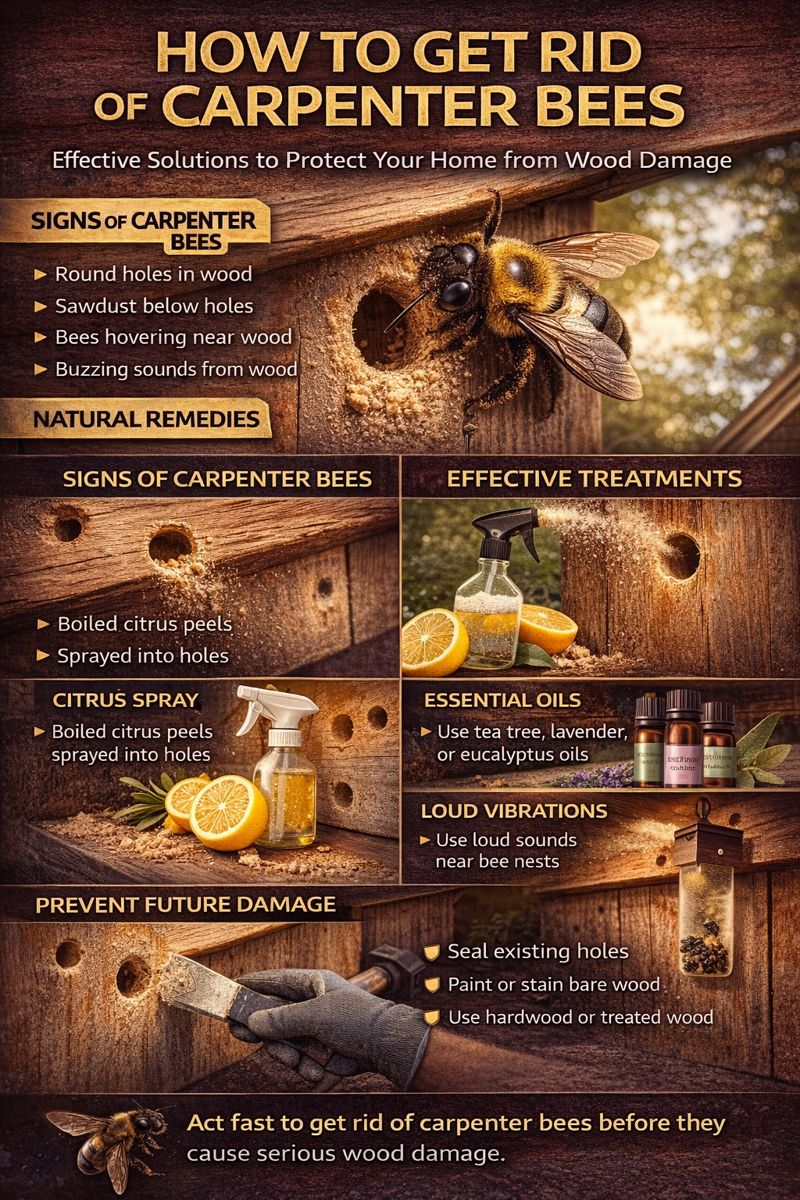
Common signs of carpenter bees include:
-
Perfectly round holes in wood
-
Sawdust or wood shavings below holes
-
Bees hovering near wooden areas
-
Buzzing sounds from wood
Why Carpenter Bees Are a Problem
While carpenter bees are important pollinators, they become a problem when they nest in homes.
Issues they cause:
-
Structural damage to wood
-
Repeat nesting in the same areas
-
Attraction of woodpeckers that worsen damage
Stopping them early prevents costly repairs.
How to Get Rid of Carpenter Bees Naturally
Use Citrus Spray
Carpenter bees dislike citrus scents.
How to use it:
-
Boil citrus peels in water
-
Let the mixture cool
-
Spray directly into bee holes
This method works best for light infestations.
Apply Essential Oils
Strong-smelling oils can repel carpenter bees.
Effective oils include:
-
Tea tree oil
-
Lavender oil
-
Eucalyptus oil
Mix with water and spray affected areas.
Use Loud Vibrations
Carpenter bees prefer quiet nesting areas. Playing loud music or using vibrations near nesting sites may cause them to leave.
Best Chemical Methods to Kill Carpenter Bees
Carpenter Bee Insecticide Dust
Insecticide dust is one of the most effective solutions.
Steps:
-
Apply dust directly into the holes
-
Wait 24–48 hours
-
Seal the holes with wood filler
This kills adult bees and larvae inside.
Carpenter Bee Sprays
Aerosol sprays kill bees on contact and are useful for visible bees.
Use during:
-
Evening or nighttime (bees are inside)
-
Calm weather conditions
Always follow safety instructions.
Do Carpenter Bee Traps Work?
Yes, carpenter bee traps can reduce activity.
How they work:
-
Bees enter trap holes
-
They cannot escape
-
Over time, population decreases
Traps work best as a support method, not a standalone solution.
How to Prevent Carpenter Bees from Coming Back
Seal All Existing Holes
After treatment:
-
Fill holes with wood putty
-
Sand smooth
-
Paint or stain the surface
This removes nesting opportunities.
Paint or Stain Bare Wood
Carpenter bees prefer untreated wood.
Best options:
-
Oil-based paint
-
Varnish or polyurethane
Use Treated or Hardwood Materials
When repairing or building:
-
Use pressure-treated wood
-
Choose hardwood over softwood
When Is the Best Time to Treat Carpenter Bees?
The best time to get rid of carpenter bees is:
-
Early spring (before nesting begins)
-
Late evening (bees are inside tunnels)
Early action prevents colony growth.
Are Carpenter Bees Dangerous?
Carpenter bees are generally not aggressive.
-
Males cannot sting
-
Females sting only when threatened
Still, caution is recommended when treating nests.
Common Mistakes to Avoid
-
Sealing holes before killing bees
-
Treating during daytime
-
Ignoring old nesting sites
-
Using traps without sealing holes
Avoiding these mistakes ensures success.
Conclusion
Knowing how to get rid of carpenter bees helps protect your home from long-term wood damage. Natural repellents, insecticide dust, traps, and proper prevention methods all play a role. Treat infestations early, seal holes properly, and protect wood surfaces to keep carpenter bees away for good.