If TikTok, Instagram, or Korean fashion feeds are your daily scroll, you’ve probably seen Acubi clothes in more than one mirror selfie. At first glance, the look seems simple – soft neutrals, low-rise pieces, slim tops, layered on repeat – but once you dig into what is Acubi aesthetic is, it becomes clear there’s a very specific logic behind it.
What Is Acubi Fashion?
First things first: what is Acubi fashion? At the core, this is a Korean-born look that pulls together clean streetwear, a softer kind of grunge, and a few Y2K touches – but without turning everyday outfits into costumes. You do not see big logos or loud neon here; it is mostly clear lines, muted colors, and silhouettes that hang a little loose but still feel thought through.
Acubi Fashion Meaning & Korean Origins
To understand Acubi fashion’s meaning, it helps to look at how South Korean street style works. Brands like Acubi Club grew inside Seoul’s youth culture, where trends often mix nostalgia with futuristic details. Fashion observers describe this “newtro” approach as taking early 2000s shapes and reworking them with modern cuts and styling.
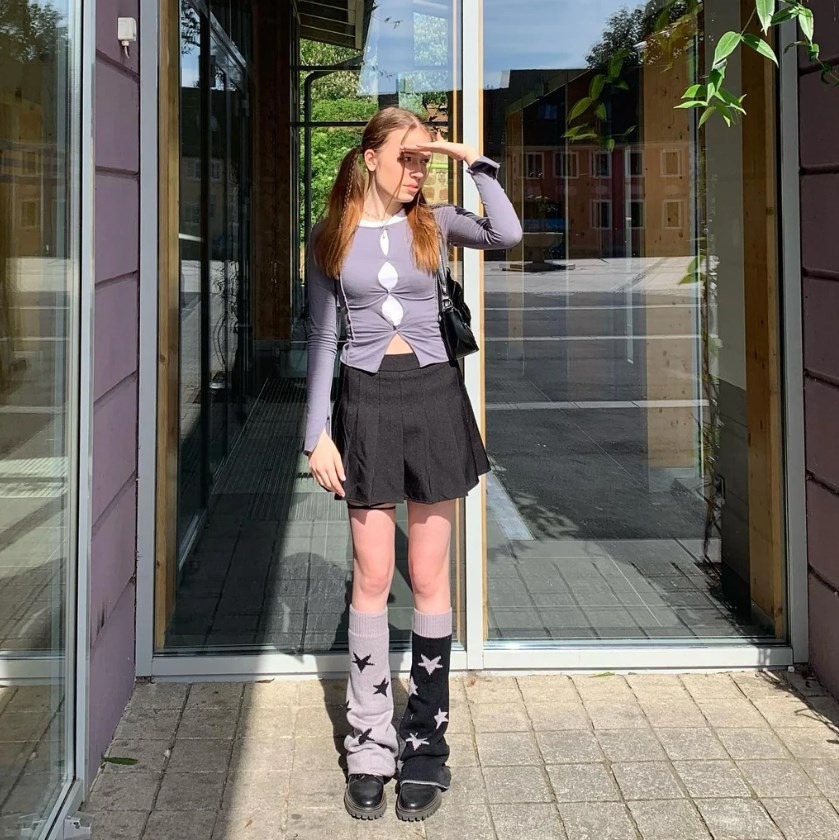
In this context, what is Acubi fashion style? It is a way to capture that Korean newtro energy with just a few basics: a cropped zip hoodie, a grey pleated mini, heavy sneakers, and an unstructured, slouchy bag.
Acubi Clothing Style: Key Elements
Generally, Acubi clothing style points to a recognizable mix of proportions, fabrics, and toned-down shades. Colors stay mostly neutral – charcoal, black, white, stone, and soft blue – with small flashes of red or metallic silver here and there. The lower half is usually low-rise and slightly slouchy, and the upper half is made up of fitted or cropped tops. The look really comes together through accessories – wide belts, silver hardware, leg and arm warmers, and compact shoulder bags.
Key features that define Acubi style clothing include:
- Low-rise cargos, parachute silhouettes, or tiny minis paired with body-hugging baby tees, light shrugs, or cropped bolero hoodies.
- Long sleeves built up with mesh and finished with a zip hoodie.
- Platform boots or chunky sneakers with socks or leg warmers peeking out.
You will see ribbed cotton, denim, mesh, and thin knitwear again and again in Acubi outfits, because they let you stack several layers without adding too much volume. The idea is to build dimension through length and texture instead of prints. A short top over a long-line tank with a low waist and long sleeves creates the stretched vertical look you see in Acubi outfits online.
How to Build an Acubi Wardrobe from Your Existing Clothes
A full new rack is not the requirement here – a good closet clean-out is. Pull out the things that already fit the brief: neutral tank tops, fitted long-sleeve tees, zip hoodies, straight or wide-leg jeans, and plain sneakers. If your clothes skew very colorful, build a tiny “Acubi section” made up only of black, grey, and white. Once that foundation is sorted, you can slowly fold in low-rise cuts, pleated skirts, or cargo pants.
Think in outfits, not in isolated items. A straightforward look – say, a grey long-sleeve tee, black low-rise denim, and white trainers – is already hovering near Acubi style clothing. Add a cropped hoodie on top, cinch with a wide belt, and finish with a small shoulder bag, and it clearly lands in Acubi fashion style territory. This approach also helps you spend less, because you are improving your styling rather than constantly buying into every collection.
Thrifting and second-hand marketplaces are another smart route to an Acubi clothing style capsule. Many early Y2K staples – low-rise jeans, sporty track tops, and small handbags – show up regularly in pre-owned listings. As long as the colors stay neutral and the fit looks easy but intentional, you can mix those older pieces with modern basics without losing the overall vibe.
Styling Acubi Fashion for Different Occasions
Once Acubi fashion style clicks for you, working it into your everyday outfits stops being complicated. For daytime, keep things straightforward: wide-leg cargos, a long-sleeve top, a cropped zip hoodie, and trainers will take you through lectures or a laid-back office just fine. Switch the hoodie for an oversized blazer and the same base instantly looks sharper and more put-together but still clearly sits in the Acubi lane.
For evenings, lean into contrast. Pair a pleated micro skirt with a fitted top, sheer tights, platform boots, and layered jewelry. A long coat or trench over the top keeps the look grounded and adds some elegance. If your schedule involves commuting or travel, cargo trousers, a baby tee, a zip hoodie, and a crossbody bag give you the mobility of streetwear with the polish of Acubi style clothes.
When you need to dress more modestly, you can keep the Acubi structure and soften the exposure. Trade low-rise for mid-rise cuts, micro minis for knee-length or midi skirts, and pick higher necklines. The layered neutrals, discreet metal details, and clean, streamlined shapes still communicate the Acubi mood – just in a version that works for stricter dress standards.

Conclusion
The real power of Acubi fashion is how easy it is to customize. Because it is based on straightforward basics rather than anything exclusive, this style is easy to bend around your own figure, spending limits, and local weather. With a bit of care for fit, fabric quality, and proportion, you can pull together Acubi-style looks from older staples, second-hand picks, and one or two fresh purchases.
So when you catch yet another lift selfie and think, Acubi fashion – what is it?, look past the framing. Check for the low-rise base, the cropped or fitted top, the controlled, neutral colors, and the layered textures. Those repeating elements are what define Acubi’s clothing style and keep it looking modern and wearable, season after season, whether you live in a small town or a big city.